Meta’s Aggressive Renewable Energy Expansion: Securing One Gigawatt of Solar Power to Fuel AI Infrastructure

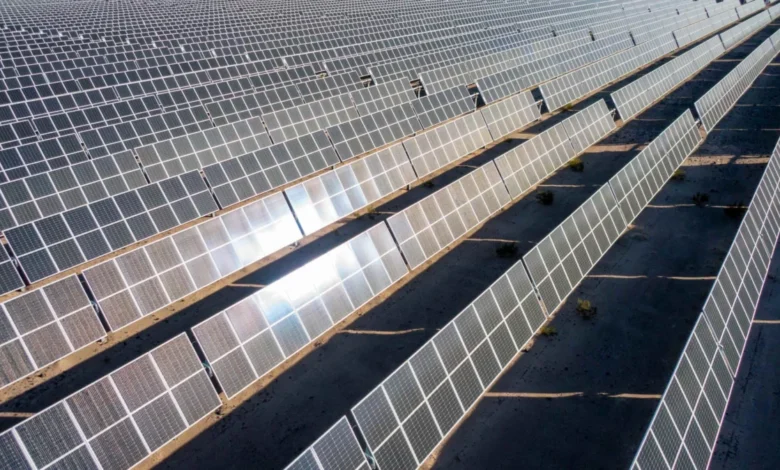
Meta has solidified its position at the forefront of the corporate energy transition by securing three major solar power procurement agreements this week, totaling nearly one gigawatt of new renewable capacity. This strategic move, part of a broader, long-term initiative to sustain the company’s rapidly expanding artificial intelligence infrastructure, brings Meta’s total solar capacity purchases for the year to over three gigawatts. As the tech industry grapples with the massive electricity requirements of generative AI, data centers, and high-performance computing, Meta’s reliance on solar energy serves as a critical case study in how the world’s largest companies are attempting to reconcile digital growth with environmental sustainability mandates.
The three agreements announced this week represent a significant escalation in Meta’s power procurement strategy. By focusing on solar, a technology that is increasingly cost-effective and capable of being deployed more rapidly than many alternative energy sources, the company is attempting to insulate its massive data center fleets from the volatility of traditional energy markets. The agreements are split between two distinct regions, with a large-scale project in Texas and two complementary initiatives in Louisiana.
A Chronology of Recent Procurement Agreements
The momentum for this week’s announcements began on Monday, when Meta unveiled a landmark deal to purchase 600 megawatts (MW) of electricity from a massive solar farm currently under development near Lubbock, Texas. This project is a key component of Meta’s strategy to scale its presence in the region. Although the power generated by this specific facility will not be directly "wired" into Meta’s data centers—a physical impossibility for most utility-scale renewable projects—the electricity will be fed into the local grid. This arrangement serves to offset the equivalent amount of energy consumed by the company’s nearby operations, essentially balancing the carbon ledger on a regional basis.
Following the Texas announcement, Meta confirmed two additional agreements in Louisiana on Tuesday, totaling 385 megawatts of capacity. Unlike the Texas project, these agreements rely heavily on the procurement of environmental attributes, which allow the company to claim the carbon-reduction benefits of renewable energy production even as it draws power from grids that may still be reliant on fossil fuels. All three projects—both in Texas and Louisiana—are slated to reach commercial operation by 2027, highlighting a strategic planning horizon that aligns with the anticipated completion dates of Meta’s next-generation data center clusters.
The Scaling AI Energy Challenge
The urgency behind these purchases is driven by a singular factor: the energy-intensive nature of artificial intelligence. As Meta pivots toward building massive AI models like Llama, the computational power required to train and run these systems is unprecedented. Each new generation of GPU clusters requires significantly more electricity than its predecessors, placing massive strain on local grids and corporate sustainability goals.
For context, the International Energy Agency (IEA) has noted that global electricity consumption from data centers could double by 2026, driven largely by the AI boom and the growth of cloud-based services. For a company like Meta, which operates a massive global network of hyper-scale data centers, the challenge is not just sourcing energy, but sourcing energy that is both reliable and "clean" according to its corporate net-zero commitments.
Solar power has become the industry’s preferred solution due to the rapid decline in the levelized cost of energy (LCOE) for photovoltaic panels. In many markets, solar energy is now cheaper to build and operate than traditional fossil fuel plants. This makes it an ideal hedge against the rising costs of traditional electricity, providing Meta with predictable, long-term power pricing while simultaneously lowering the carbon intensity of its operations.
The Role of Environmental Attribute Certificates
A critical element of Meta’s strategy involves the use of Environmental Attribute Certificates (EACs), also known as Renewable Energy Certificates (RECs). In the Louisiana deals, the focus is on purchasing these attributes to offset the company’s carbon footprint. EACs function as a market-based instrument that certifies that a certain amount of electricity was generated from a renewable source.
However, the reliance on EACs has become a point of contention among environmental policy experts. Critics argue that these certificates can sometimes obscure the reality of a company’s carbon footprint. When a company purchases EACs, it does not necessarily mean that the electricity powering its servers is coming from a solar farm; rather, it is a financial transaction that supports renewable projects elsewhere.
Historically, EACs were essential for incentivizing the development of renewables when the technology was prohibitively expensive. By providing an additional revenue stream, these certificates helped bridge the gap for developers. Today, however, with the cost of solar and wind energy falling below that of coal and natural gas in many regions, the necessity of EACs as a primary incentive is being questioned. Skeptics argue that if a company is truly committed to sustainability, it should focus on "additionality"—the requirement that the company’s investment directly leads to the creation of new renewable capacity that would not have existed otherwise.
Industry Implications and Market Analysis
The implications of Meta’s procurement strategy extend beyond the company itself. By committing to nearly one gigawatt of power in a single week, Meta is signaling a shift in how major corporations interact with utility markets. The move forces grid operators to modernize their infrastructure to handle intermittent power sources and encourages utility companies to expedite the permitting and construction of large-scale renewable farms.
Analysts point out that this "race for power" could have long-term consequences for energy markets. As tech giants like Meta, Google, Microsoft, and Amazon compete for the best sites for renewable energy generation, they may inadvertently drive up the cost of land or equipment for smaller players. Furthermore, the sheer scale of these procurements creates a "clustering effect," where energy infrastructure is built primarily to serve the needs of a single tenant, potentially creating imbalances in local grid demand.
The broader tech sector is currently in a state of flux regarding how it measures success in energy transition. While Meta’s 3-gigawatt milestone is an impressive achievement in terms of scale, the industry is increasingly moving toward "24/7 carbon-free energy" (CFE) matching. This more rigorous standard aims to ensure that renewable energy is generated at the same time and in the same grid region as it is consumed, effectively eliminating the gaps that current EAC accounting models may leave open.
Future Outlook and Sustainability Commitments
As Meta looks toward 2027 and beyond, the company faces a dual challenge: continuing its aggressive AI research and development while maintaining its pledge to reach net-zero emissions across its entire value chain. The company has already reached 100% renewable energy for its global operations through the purchase of energy and offsets, but as its footprint grows, the bar for what qualifies as "renewable" is rising.
The coming years will likely see a transition from simple capacity procurement to more complex energy management strategies, including the integration of utility-scale battery storage and potentially nuclear or geothermal energy to provide baseload power that solar and wind cannot currently offer on their own.
Meta’s recent moves underscore a broader realization among the "Big Tech" cohort: energy is now the primary constraint on the speed of innovation. By securing large-scale solar contracts, the company is effectively de-risking its future, ensuring that its AI ambitions are not stifled by power shortages or the volatile pricing of fossil-fuel-dependent grids. However, as the debate over EACs and grid-additionality intensifies, the company will likely face increasing scrutiny regarding the quality and impact of its environmental investments.
In conclusion, while the headline numbers of Meta’s three-gigawatt solar purchase are undeniably significant, the true impact of these agreements will be measured by how effectively they spur genuine, new renewable capacity and help the company transition toward a truly carbon-free energy profile. For now, the strategy represents the most aggressive approach currently available to address the massive, growing energy hunger of the artificial intelligence age.
Related posts: